
Delivered by H.E. Ambassador Walid Khalid Obeidat, Permanent Representative of the Hashemite Kingdom of Jordan to the United Nations.
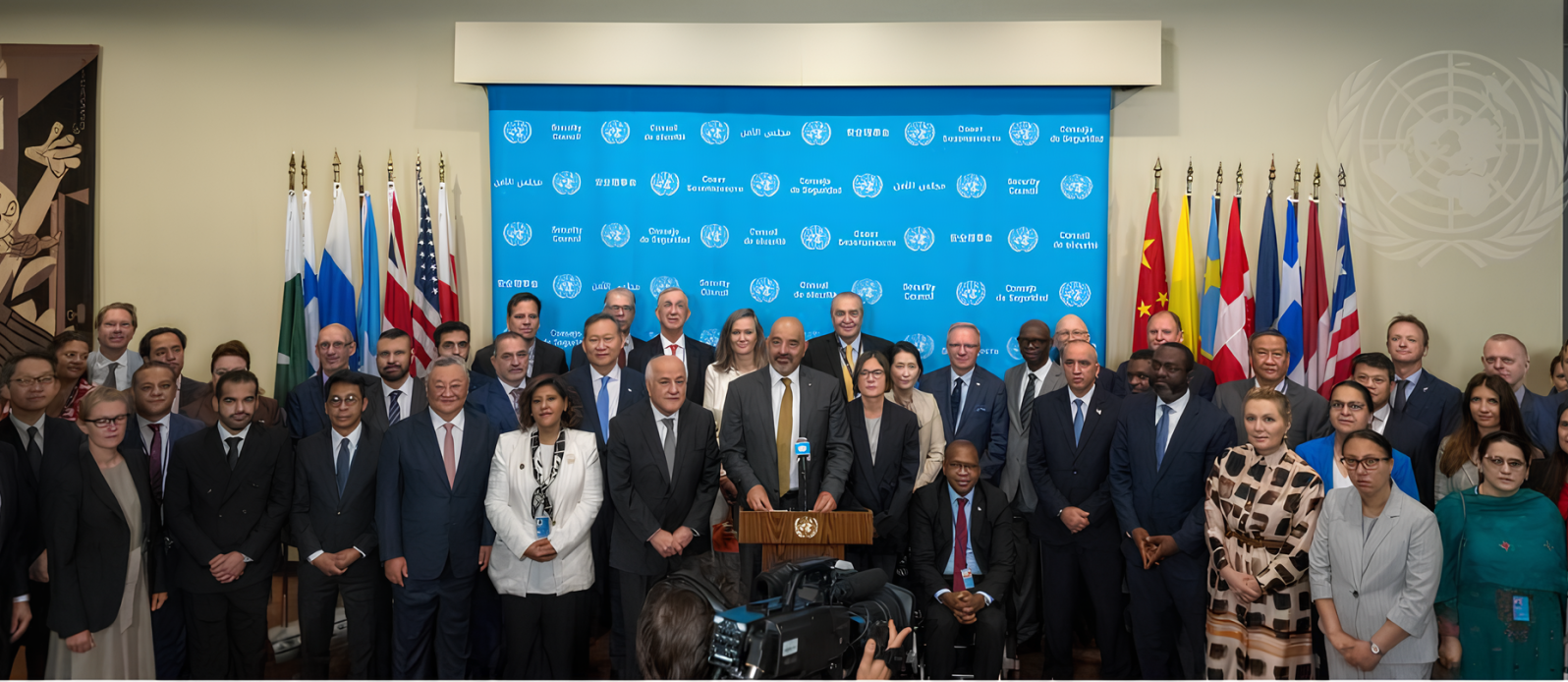
I have the honour to deliver this statement on behalf of 88 States and my own country Jordan.
We gather just before the UN Security Council’s annual debate on the protection of civilians to sound an alarm.
Civilians in about 130 armed conflicts around the world face unacceptable realities. They suffer the effects of devastating attacks, including by explosive weapons, the remnants of which remain pervasive threats; they face destruction of critical infrastructure and life-sustaining services, including health care. They are displaced from their homes in record numbers and are too often separated from their families and deprived of education and opportunities, with generational impacts. As the Secretary-General has just published in his annual report, the UN recorded more than 37,000 civilian deaths across twenty armed conflicts in 2025.
The rules of war, which exist to reduce civilian harm, are binding on all parties to armed conflict at all times and are indispensable. The erosion of respect for international humanitarian law (IHL), the rules of war, demands an urgent political response.
This is why the Global Initiative to Galvanize Political Commitment to International Humanitarian law was launched in September 2024 by Brazil, China, France, Jordan, Kazakhstan, and South Africa together with the International Committee of the Red Cross (ICRC). The Initiative is intended to reaffirm commitment to IHL at the highest level and to advance outcomes that strengthen implementation of existing law.
To date, 111 States have officially joined the Initiative, many of them standing here today. Twenty-seven States are engaged as co-chairs of seven workstreams to deliver practical recommendations; and over 160 States have participated in consultations and deliberations.
Together, we are addressing some of the most pressing challenges in contemporary warfare: the protection of hospitals and civilian infrastructure, naval warfare, the role of IHL in promoting sustainable peace, and safeguarding civilians, including humanitarian personnel, from harm in armed conflicts.
I am honoured to announce that, following two years of work and strong engagement by states from all regions, the Hashemite Kingdom of Jordan will host a culminating High-Level Conference on Humanity in War on the 7th of December.
We have three asks today.
First, we ask that all states make respect for IHL, including the protection of civilians, a top priority at home and abroad.
Second, we encourage all states that are not yet members to join the Global IHL Initiative, and to actively contribute to the Initiative’s concrete outcomes. Our collective resolve is key to the success of this endeavour, which ultimately aims at improving IHL implementation on the ground in armed conflicts.
And third, we encourage States to be represented at the conference in Jordan this December at the highest possible level.
Together, we must uphold humanity in war.
Thank you.
END
Joining the statement:
Albania, Algeria, Andorra, Armenia, Australia, Austria, Bahrain, Belgium, Bosnia and Herzegovina, Botswana, Brazil, Bulgaria, Cambodia, Canada, China, Colombia, Costa Rica, Croatia, Cuba, Czechia, Cyprus, Democratic Republic of the Congo, Denmark, Dominican Republic, Egypt, Estonia, European Union, Finland, France, Georgia, Germany, Ghana, Greece, Guatemala, Guyana, Hungary, Iceland, Indonesia, International Committee of the Red Cross, Ireland, Italy, Japan, Jordan, Kazakhstan, Kenya, Kuwait, Latvia, Lebanon, Lesotho, Liberia, Libya, Liechtenstein, Lithuania, Luxembourg, Malta, Mexico, Monaco, Montenegro, Morocco, Netherlands (Kingdom of the), New Zealand, Norway, Oman, Pakistan, Panama, Peru, Philippines, Poland, Portugal, Qatar, Republic of Korea, Republic of Moldova, Romania, San Marino, Saudi Arabia, Sierra Leone, Slovakia, Slovenia, Somalia, South Africa, Spain, State of Palestine, Sweden, Switzerland, Syrian Arab Republic, Thailand, Tunisia, Ukraine, United Arab Emirates, United Kingdom of Great Britain and Northern Ireland, and Uruguay.